


Which Country Did Pickleball Originate From?
Pickleball: A Fast-Growing Sport Born in the USA and Loved Worldwide
In today’s diverse sports landscape, Pickleball continues to rise in popularity thanks to its accessibility, excitement, and unique blend of multiple racquet sports.
But have you ever wondered where this engaging and fast-paced sport began?
The answer is simple: Pickleball originated in the United States, a nation well known for its innovation and vibrant recreational culture. From a backyard pastime to a global phenomenon, Pickleball’s journey is both inspiring and remarkable.
I. The Origin Story: A Spark of Creativity on Bainbridge Island
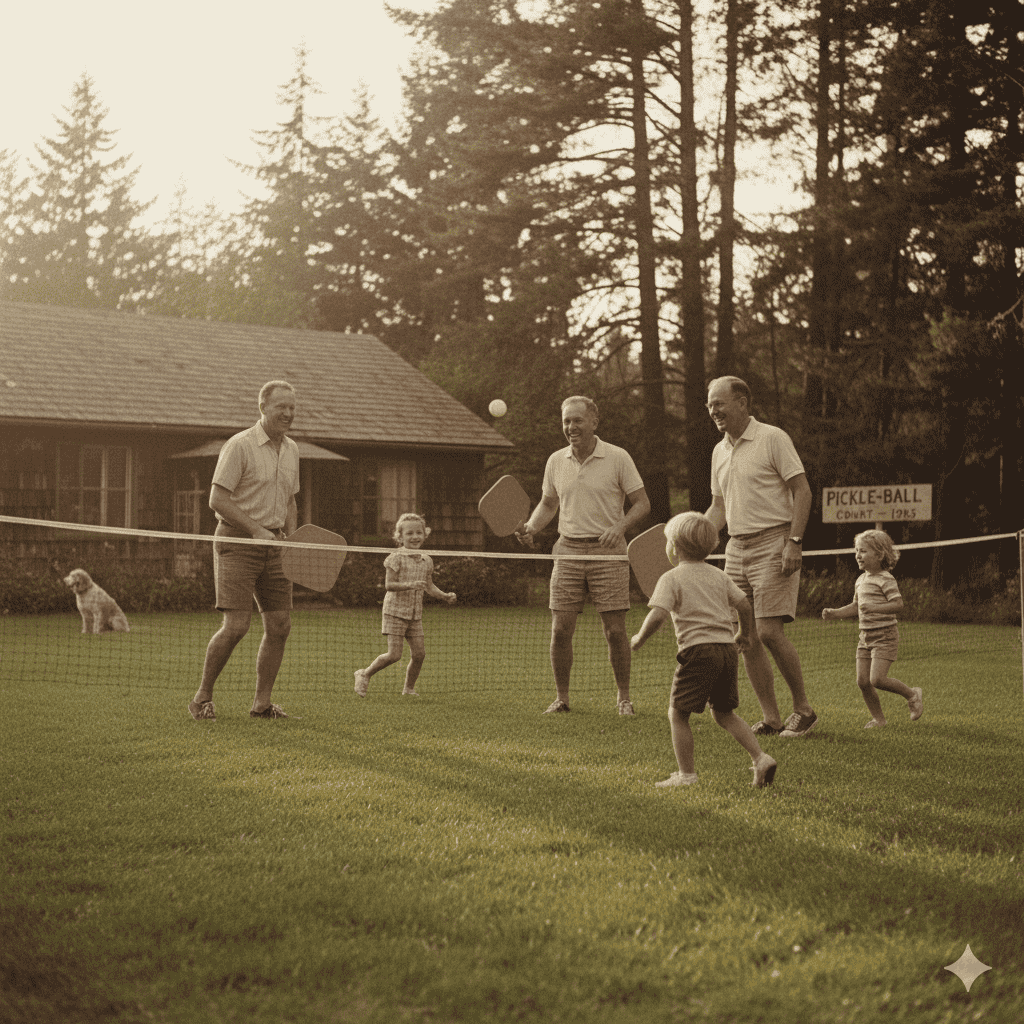
Let’s rewind to the summer of 1965, on Bainbridge Island near Seattle, Washington.
Three imaginative and sports-loving fathers—Joel Pritchard, Bill Bell, and Barney McCallum—were looking for a fun and simple outdoor activity to entertain their children. What started as a casual idea quickly evolved into a brand-new sport.
They improvised with what they had:
• A badminton court
• Paddles resembling table tennis equipment
• A perforated plastic ball
By combining elements of tennis, badminton, and table tennis, they unknowingly created the foundation of what would become Pickleball. Even though the early equipment was homemade and the rules were basic, the game’s charm was undeniable. Friends, neighbors, and visitors were soon drawn to this quirky new sport, setting the stage for its rapid development.
II. Development History: From Local Hobby to Global Trend
In its early years, Pickleball remained a local favorite in the Seattle area, serving as an accessible activity for families, schools, and community centers. As more people began playing, its creators and early players refined the rules—formalizing serving techniques, court dimensions, and scoring systems.
During the 1970s, Pickleball expanded beyond the Pacific Northwest.
More community facilities adopted the game, and its popularity grew steadily.
By the 1980s and 1990s, Pickleball had entered a period of accelerated development. Competitions and leagues emerged across the United States, attracting players of all ages and skill levels.
As globalization advanced, Pickleball’s appeal transcended borders. Today, it is played across Europe, Asia, Oceania, the Middle East, and Latin America, becoming one of the fastest-growing sports worldwide.
III. The Unique Appeal: Why the World Fell in Love with Pickleball
The global success of Pickleball can be attributed to several compelling qualities:
1. Easy to Learn
Pickleball’s beginner-friendly rules allow people of all ages to pick it up quickly. Players can learn the basics in just a few minutes.
2. Fun and Competitive
It blends strategy, agility, and teamwork. Every rally challenges players to think, react, and cooperate, creating fast-paced yet enjoyable matches.
3. Suitable for All Ages
Its moderate intensity makes it ideal for children, adults, and seniors. Whether for recreation or serious competition, the sport accommodates everyone.
4. A Strong Social Component
Pickleball creates community.
On courts around the world, people make new friends, interact socially, and build meaningful connections through shared passion.
These characteristics have helped Pickleball become more than just a sport—it has become a lifestyle and a social movement.
IV. Global Influence: Emerging on the International Stage
Today, Pickleball continues to gain recognition across the world.
A major milestone arrived in 2024, when Pickleball was featured as a demonstration sport at the Paris Olympics, marking a significant step toward future Olympic inclusion.
Organizations such as the International Pickleball Federation (IFP) are actively working to standardize the sport globally and advocate for its eventual acceptance as an official Olympic sport.
Beyond competition, Pickleball’s commercial ecosystem is booming—spanning paddles, balls, apparel, court construction, coaching services, and events. Its economic and cultural influence is expanding rapidly.
Pickleball has also become a bridge for international friendship.
Players from different countries meet at tournaments, exchange techniques, and share cultural experiences, strengthening global sportsmanship and unity.
V. Future Outlook: Endless Potential for Global Growth
Looking ahead, Pickleball’s future is full of possibilities.
As health awareness grows worldwide, more people are choosing Pickleball for fitness and recreation. Technological advancements—such as improved paddle materials and smart scoring systems—will further refine the sport.
Governments and sports organizations are increasingly supporting Pickleball by building more courts, organizing more events, and training more referees and coaches.
With its combination of accessibility, excitement, and inclusivity, Pickleball is poised to shine even brighter on the world stage. It will continue to bring health, joy, and community to millions, becoming a true gem in global sports culture.
Let us look forward to a vibrant and inspiring future for Pickleball!
BHI Pickleball -Custom Pickleball Paddle


