


A Simple Introduction to Pickleball Rules
Master the Basics of Pickleball Rules: Begin Your Fun and Easy Journey Into the Sport
Among the vast world of emerging sports, pickleball has rapidly captured the hearts of countless players with its accessibility, excitement, and charm.
To truly enjoy this sport, understanding its basic rules is the essential first step. These rules not only maintain fairness but also create a smooth and enjoyable playing experience.
I. Serving Rules: The Beginning of Every Rally
Every pickleball point begins with the serve, and the rules surrounding it are clear and deliberate.
The server must stand with both feet behind the baseline, within the designated service area. This ensures that all players start each rally from a fair and consistent position.
The serve must be underhand, allowing the receiver time to react and making the start of the rally accessible for players of all levels. The ball must be served diagonally into the opponent’s service box, and it must bounce once before the receiver can return it.
A well-placed serve can create an immediate advantage. For instance, a quick, low serve may force the receiver into a rushed return, while a serve with subtle sidespin can cause the ball to curve unexpectedly after bouncing—challenging even experienced players.
Thus, even though the serving motion is simple, mastering accuracy, placement, and spin brings strategic depth to the game.
II. Hitting Rules: Controlling the Ball and the Rally
Hitting the ball correctly is the core of pickleball.
Players may only use their paddle to strike the ball, and the ball may bounce once on their side before it must be returned over the net. Returning the ball after the bounce or volleying it out of the air—as long as it complies with all other rules—is legal.
Players must focus on paddle angle, timing, and footwork to control the ball’s direction, speed, and spin. For example:
• To deliver a deep, high defensive shot, a player can angle the paddle slightly upward and strike the ball with a lifting motion.
• For a fast, flat drive, they can keep the paddle face vertical and swing quickly through the ball to send it sharply toward the opponent.
These variations make pickleball dynamic and exciting, offering endless possibilities for creativity and tactical play.
III. Scoring Rules: Measuring Every Moment of the Match
Pickleball uses a simple yet strategic scoring system.
Only the serving team can score points. If they win the rally, they score one point and continue serving.
Games are typically played to 11 points, and a team must win by at least 2 points. At a 10–10 tie, the game continues until one side achieves a 2-point lead.
This scoring method keeps matches suspenseful and competitive. Even players who fall behind early still have a chance to turn the game around, motivating both sides to stay focused and composed until the final point.
IV. The Non-Volley Zone (Kitchen): The Tactical Equalizer
One of the most distinctive rules in pickleball involves the Non-Volley Zone (NVZ), often called the “kitchen.”
This zone extends 7 feet from the net on each side. Players cannot volley the ball (hit it in the air) while standing in this zone. Their feet must be completely outside the NVZ at the moment of contact if the ball has not bounced.
This rule prevents players from dominating the net with overpowering smash volleys, encouraging more strategic play. Players must decide whether to stay back, advance carefully, reset the point, or lure the opponent into a mistake.
For example:
• If the ball lands in the NVZ, players must let it bounce before returning it, often opting for a soft, controlled shot to regain positioning.
• When the ball stays outside the zone, players can step forward aggressively to volley or execute overhead attacks.
The kitchen rule adds balance, strategy, and finesse to every rally.
V. Match Format and Additional Key Rules
A full pickleball match usually consists of several games, with the first player or team to win the required number of games declared the overall winner.
Other important rules ensure fairness and safety:
• Players must not touch the net during play. Doing so results in a fault.
• Shots landing outside the boundary lines are considered out, emphasizing the importance of control and precision.
• In doubles, specific rules govern the serving order and player rotation, requiring teams to communicate clearly and cooperate effectively.
Together, these guidelines preserve the spirit of sportsmanship and maintain an orderly, enjoyable competitive environment.
Enjoying Pickleball Starts With Understanding the Rules
The rules of pickleball are straightforward and easy to learn.
With a bit of practice, players can quickly master the basics and begin enjoying fast-paced rallies, clever tactics, and joyful moments on the court.
Whether you're playing under bright sunshine on an outdoor court or practicing in a well-equipped indoor facility, let’s embrace these rules, enjoy the challenge, and experience the fun and energy that pickleball brings.
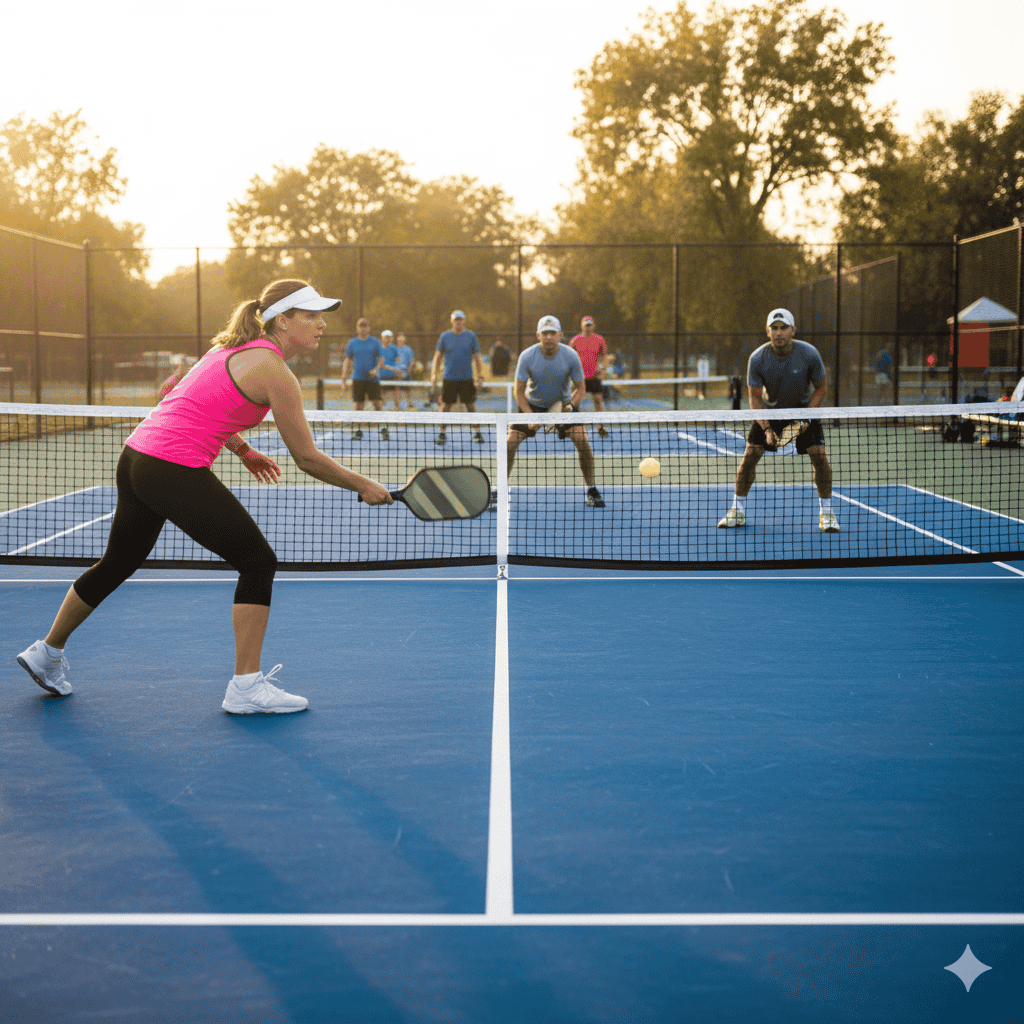
BHI Pickleball -Custom Pickleball Paddle


